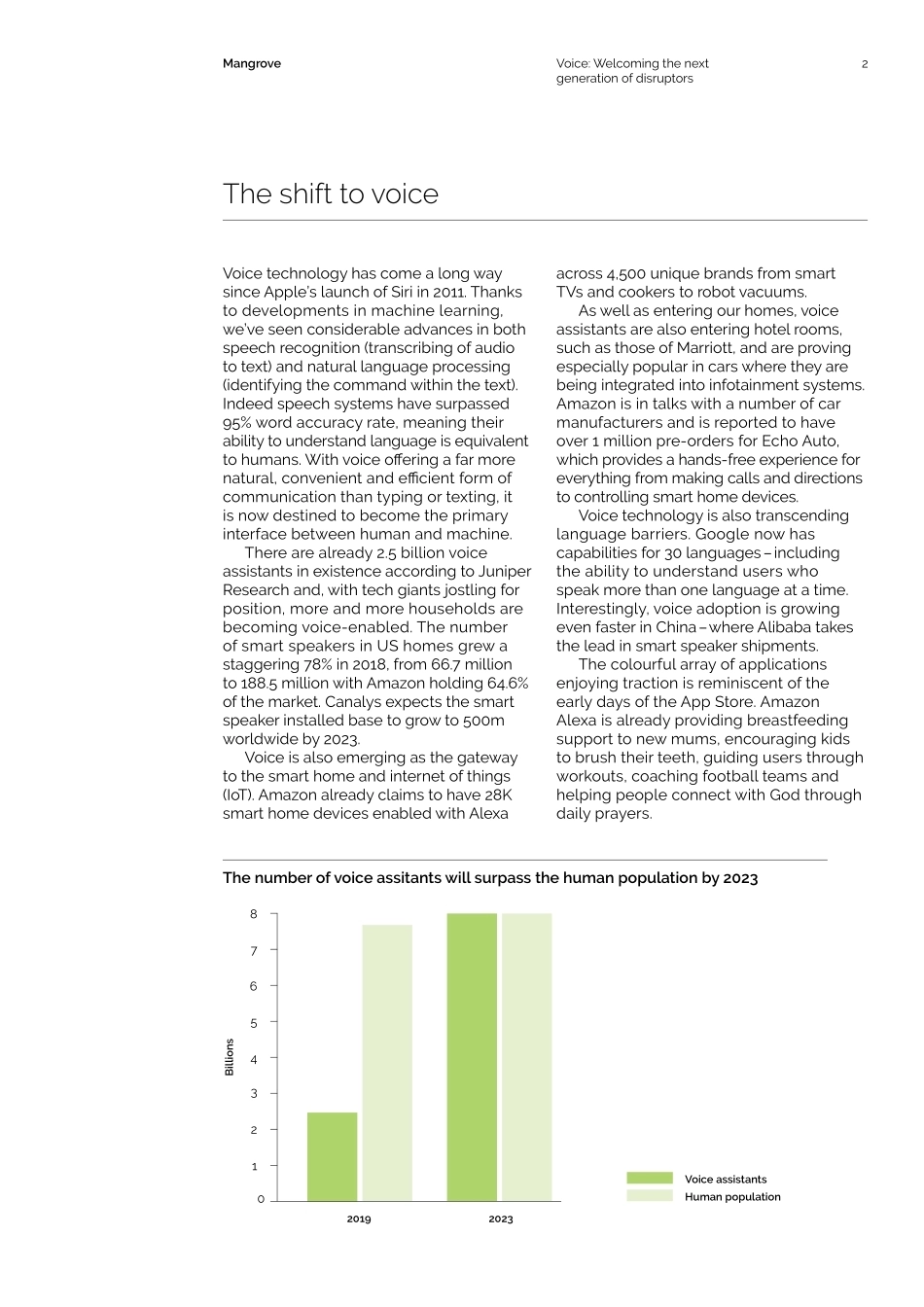
Voice: Welcoming the next generation of disruptorsReport1MangroveVoice: Welcoming the next generation of disruptors“ The best interface is no interface” Golden KrishnaAfter many years of typing on keyboards and then tapping on mobile screens, we are now reverting to the original “user interface” – voice. While we are yet to feel the full impact of voice technology, it is gradually transforming how we interact with the digital world. Importantly, this shift will go far beyond checking the weather forecast, requesting music or setting a timer. Voice represents both a platform and user interface (UI) shift comparable to the web and smartphones. And as the front door to artificial intelligence and machine learning, voice technology will find powerful new ways to serve us. At Mangrove we believe voice will be one of the defining themes of the next decade. As well as impacting every business with a digital presence, it will spawn a new generation of technology companies in every category. And together with AI, it will radically change the relationship between human and machine as well as make the next generation of software the most valuable yet.2MangroveVoice: Welcoming the next generation of disruptorsVoice technology has come a long way since Apple’s launch of Siri in 2011. Thanks to developments in machine learning, we’ve seen considerable advances in both speech recognition (transcribing of audio to text) and natural language processing (identifying the command within the text). Indeed speech systems have surpassed 95% word accuracy rate, meaning their ability to understand language is equivalent to humans. With voice offering a far more natural, convenient and efficient form of communication than typing or texting, it is now destined to become the primary interface between human and machine.There are already 2.5 billion voice assistants in existence according to Juniper Research and, with tech giants jostling for position, more and more households are becoming voice-enabled. The number of smart speakers in US homes grew a staggering 78% in 2018, from 66.7 million to 188.5 million with Amazon holding 64.6% of the market. Canalys expects the smart speaker installed base to grow to 500m worldwide by 2023. Voice is also emerging as the gateway to the smart home and internet of things (IoT). Amazon already claims to have 28K smart home devices enabled with Alexa The shift to voiceThe number of voice assitants will surpass the human population by 2023across 4,500 unique brands from smart TVs and cookers to robot vacuums.As well as entering our homes, voice assistants are also entering hotel rooms, such as those of Marriott, and are proving especially popular in cars where they are being integrated into infotainment systems. Amazon is in talks with a number of car manufacturers and is reported to have over 1 million pre-orders for Echo Auto, which provides a hands-free experience for everything from making calls and directions to controlling smart home devices. Voice technology is also transcending language barriers. Google now has capabilities for 30 languages – including the ability to understand users who speak more than one language at a time. Interestingly, voice adoption is growing even faster in China – where Alibaba takes the lead in smart speaker shipments.The colourful array of applications enjoying traction is reminiscent of the early days of the App Store. Amazon Alexa is already providing breastfeeding support to new mums, encouraging kids to brush their teeth, guiding users through workouts, coaching football teams and helping people connect with God through daily prayers.Billions7538642102019Voice assistants2023Human population3MangroveVoice: Welcoming the next generation of disruptorsVoice shopping is also growing with Alexa directly connected to one of the world’s largest online stores. Amazon saw e-commerce on Alexa triple over the 2018 holidays compared to the year before. No wonder then that Walmart recently introduced voice ordering for its online grocery service through Google Assistant, allowing shoppers to add products to their list by talking to their Google Home, smartphones, or smartwatches. Voice shopping is expected to jump from $2 billion in 2018 to $40 billion by 2022 across the US and UK according to Juniper. Interestingly, the three most commonly shopped categories through The rise of voice-commercevoice are all commoditized: grocery (20%), entertainment (19%) and electronics (17%), so having “Amazon Choice” status will be more important than ever for retailers. According to OC&C Strategy Consultants, 85% of Amazon customers end up selecting the product Amazon suggests, although how specific products get the designation remains a mystery.Voice technology is already guiding consumers through purchasing, whether online or in physical stores. And FMCG manufacturers are exploring how voice-based experiences, such as cocktail making and whiskey tastings, can enhance their product positi...




发表评论取消回复