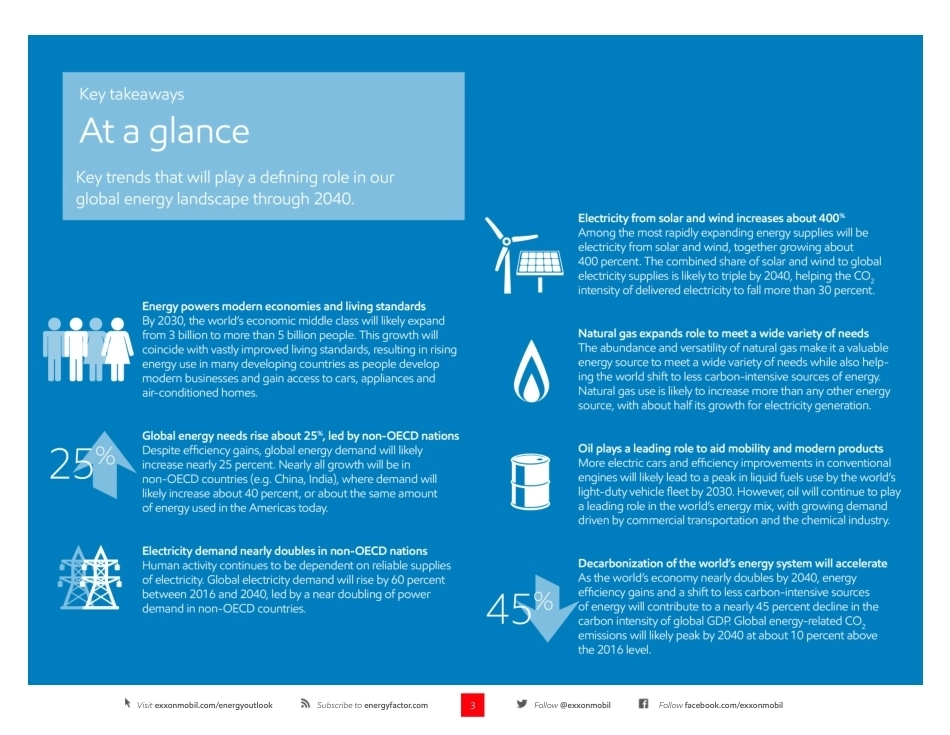
2018 Outlook for Energy: A View to 20402Visit exxonmobil.com/energyoutlookSubscribe to energyfactor.comFollow @exxonmobilFollow facebook.com/exxonmobil2018 Outlook for Energy: A View to 2040The Outlook for Energy is ExxonMobil’s view of energy demand and supplythrough 2040. We use the Outlook to help inform our long-term businessstrategies and investment plans.A significant energy transition is underway, and many factors will shape theworld’s energy future. These include government ambitions and policies thatseek to promote prosperity while also addressing the risks of climate change.The recent Paris Agreement1 on climate change provided significant insights on governments’ intentions to reduce greenhouse gas (GHG) emissions through the inclusion in the agreement of nationally determined contributions(NDCs). Policies adopted to support NDCs will likely affect supply and use ofenergy across society. To support economic progress and make substantial progress on the climategoals identified in the Paris Agreement, well-designed and transparent policyapproaches that carefully weigh costs and benefits are needed. Such policies are likely to help manage the risks of climate change while also enablingsocieties to pursue other high-priority goals – including clean air and water,access to reliable, affordable energy and economic progress for all people. Technology will also be vital to improve living standards while addressing climaterisks. Advances continue to reshape the energy playing field. Many technologiesnot prevalent five to 10 years ago have a more significant role today, and theirimpacts will continue to expand. Examples include wind and solar power,unconventional oil and gas development, and electric cars. Meeting the dualchallenge of mitigating the risks of climate change while boosting standards ofliving will require additional technology advances.While policies and technologies help shape living standards and the evolution of energy, they also disrupt the status quo and can cause uncertainty andunexpected consequences. Accordingly, as part of the Outlook developmentprocess, we develop and use sensitivities to help our understanding of possibleenergy outcomes. This year’s Outlook includes several sensitivities on specific areas of interest toprovide greater perspective on how changes to our base Outlook assumptionscould affect the energy landscape.This year’s Outlook also includes a new section, “Pursuing a 2oC Pathway.”This section utilizes work coordinated by the Energy Modeling Forum at Stanford University.2 It provides a view of potential pathways toward a 2oCclimate goal, and the implications such pathways might have in terms of globalenergy intensity, carbon intensity of the world’s energy mix and global demandfor various energy sources. The section concludes with a discussion of the need to pursue practical, cost-effective solutions to address multiple goals simultaneously. The Outlook anticipates significant changes through 2040 across the world toboost living standards, reshape the use of energy, broaden access to abundantenergy supplies, and accelerate decarbonization of the world’s energy system toaddress the risks of climate change. A role for everyoneSeven billion people shape the world’s energy system and have a direct impacton the fundamental drivers of energy demand. Energy impacts the economy aswell as security and environmental goals. Energy solutions can vary over timeand circumstances. Think about how access to energy affects your own life, and how that translates to billions of other people around the world. Compare yourown conclusions on the energy future with those in the Outlook.Energy is fundamental to modern life, and as the world’s population approaches9 billion people in 2040, we are challenged to improve living standardseverywhere. We expect that progress will be powered by human ingenuity and the energy that helps make better lives possible.3Visit exxonmobil.com/energyoutlookSubscribe to energyfactor.comFollow @exxonmobilFollow facebook.com/exxonmobilKey takeaways at a glanceKey trends that will play a defining role in our global energy landscape through 2040.4Visit exxonmobil.com/energyoutlookSubscribe to energyfactor.comFollow @exxonmobilFollow facebook.com/exxonmobil2018 Outlook for EnergyContents 3 Key Takeaways 6 Fundamentals11 Demand14 Transportation18 Residential and commercial21 Industrial25 Electricity and power generation29 Emissions32 Supply 34 Liquids37 Natural gas42 Sensitivities44 Pursuing a 2oC pathway54 Energy matters55 Data61 Glossary5Visit exxonmobil.com/energyoutlookSubscribe to energyfactor.comFollow @exxonmobilFollow facebook.com/exxonmobilFoundationEconomic growthDemand for servicesEnergy sourcesPolicy/tech changesTest uncertaintyWe create a starting pointfor our projections usingInternational Energy Agency(IEA) annual data, along with third-party data and recentenergy trends.These drivers, along withconsumer preferences, help usdetermine demand for ene...





发表评论取消回复